

Celebrating Second Chances

Movies about second chances are fairly common fare in the world of cinema. They provide opportunities to explore the value of themes like redemption and forgiveness. And these notions are usually examined within the context of interpersonal dramas or gentle comedies. So it’s truly unusual to find them as thematic underpinnings in as unlikely a context as science fiction. Nevertheless, such is the case in the new Spielbergian summertime blockbuster, “The End of Oak Street” (web site, trailer).
It’s summer 1982 in suburban Michigan, and the Oak Street community is holding its annual block party. All the neighbors are participating in the festivities, including cookouts and fun and games for the kids. So it is for the Platt family, a prototypical nuclear family headed by mother Denise (Anne Hathaway) and father Greg (Ewan McGregor), parents of teenage children Audrey (Maisy Stella) and Brian (Christian Convery), and proud owners of a mischievous but resourceful Australian cattle dog named Starbuck. On the surface, they appear as happy and healthy a family as one might find in any Steven Spielberg movie of the era. But, beneath thus façade, there’s trouble in paradise.
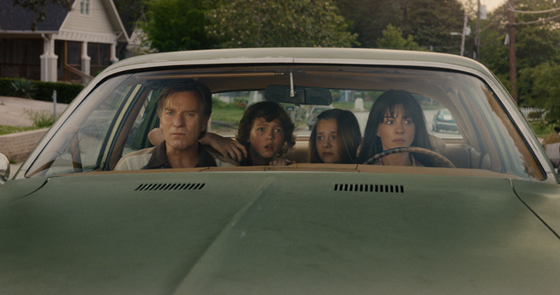
For starters, Denise and Greg have been experiencing marital problems, arguing frequently about various issues involving money, the satisfaction in their relationship, dad’s inexplicable workaholic tendencies (cover for a darker secret) and Greg’s leanings toward problem drinking. Denise has even been writing a book about her situation, a thinly veiled work of fiction documenting her prevailing dissatisfaction, including her practice of keeping a suitcase packed at all times in case she feels the need to make a hasty escape. The kids experience their share of difficulties, too. Audrey is frustrated that the family can’t afford to send her to the college of her choice, Cornell, for which she has held a dream of studying astronomy and following in the footsteps of her idol, one of the university’s celebrated professors, Carl Sagan. Meanwhile, Brian is experiencing the typical world-ending adolescent trials and tribulations of confronting the neighborhood bully, Kaden (Hudson Meek), and longingly swooning over the arrival of a pretty new neighbor girl, Jeanette (Jordan Alexa Davis), who pays him no mind. And the entire Platt family has had to contend with their cantankerous next-door neighbor, Mel (P.J. Byrne), who constantly complains to them about everything, especially the rambunctious transgressions into his yard by Starbuck. But the stress of all of these issues pales in comparison to what’s about to unfold.
As in typical summertime action-adventure fashion, things start out slowly, such as with the sudden appearance of a mysterious, unidentified plant in the backyard. Denise consults the local librarian, Mrs. Valcourt (Emily Kuroda), for an answer, but she’s unable to help much other than to say that the specimen resembles an extinct prehistoric species. But circumstances ramp up quickly thereafter with the occurrence of bright flashes of light late at night, accompanied by strong winds, events that leave more anomalous traces of evidence that something is amiss and that knock out the functionality of all infrastructure components, like power, phone service and radio signals. However, these developments are nothing compared to what follows – the appearance of ravenous dinosaurs marauding through the neighborhood.
Needless to say, the family is dumbstruck by this unexpected event. But, then, who wouldn’t be? Imagine witnessing your unsuspecting neighbors being instantly and unceremoniously gobbled up by these single-minded carnivores. And, even though gas-powered vehicles still function, there’s nowhere to go, given that Oak Street is cut off from what has now become the outside world. Much to their disbelief, the Platts are trapped, unaware of how this scenario arose and what they can do to get out of it.
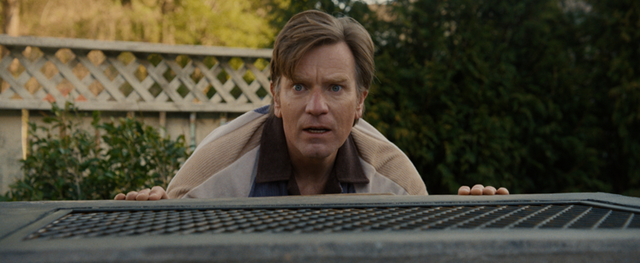
Considering the circumstances, survival becomes the primary priority at this point, an objective that’s more challenging than what one might expect. The family is constantly on the run, looking for ways to hide and to outwit the creatures hunting them down as food. What’s more, the usual extensions of compassion that members of a civilized society would naturally try to provide to others have become risky luxuries compared to the conditions that operated previously. Efforts to find a lost Starbuck, for example, become a matter of life and death when he escapes and runs away on one of his typical tangents. And helping Jeanette when she gets in trouble threatens her safety, as well as that of her would-be rescuers.
So is escape even possible at this point? That’s hard to say. But, when Audrey breaks down the events that led up to this situation, she proposes a theory (strange though it may be) that might explain how and why this scenario could have come about. However, is this evacuation hypothesis achievable or just wishful thinking? That’s what the Platts attempt to find out. Maybe they’ll get a second chance after all, an opportunity for escape and redemption. If they don’t succeed, though, they may ultimately be facing the end of Oak Street – and themselves.
At first glance, this situation probably seems hopelessly insurmountable. But is that really true? What if Audrey’s theory has genuine validity? Wouldn’t that provide a viable solution? In actuality, though, much would depend on the characters’ belief in the possibility to avail themselves of it. Given the nature of the solution, Audrey might be just as wrong as right. But suppose a belief in its viability is factored into the mix. Wouldn’t that increase the possibility of success? Adherents to this notion would undoubtedly agree with the principles underlying this philosophy, one that maintains we draw upon the power of our beliefs in creating the existence we experience. It’s unclear (though probably unlikely) that any of the Platt family members have heard of this school of thought, but, with their backs to the wall, they may have no other choice open to them under these circumstances. After all, in line with this thinking, outcomes are indeed alterable with changes in beliefs, including something as potentially suspect as the possibility that second chances are even attainable. So, in light of that, given the choices available, what would you choose?
For starters, considering the extraordinary conditions in place in this scenario, those seeking a solution would need to look to answers (and the beliefs underlying them) that are equally extraordinary. There’s an inherent risk in this, of course, that those new implementing beliefs may be so outrageous that they would be hard to believe. That’s where thinking outside the box comes into play, specifically the need to push past conventional limitations in devising intents that can be employed to achieve success. That would be a tall order, to be sure, but such innovative ideas – if employed skillfully and effectively – just might attain the sought-after outcome. Think about that the next time you’re faced with circumstances in which it would seem that there’s no way out.
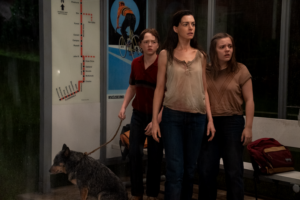
Engaging in a practice like this also calls for implementing determined focus. When one’s very survival is on the line, considerations once considered important may seem trivial by comparison. Worries about money, relationship matters, college education choices and the neighborhood bully, for example, suddenly appear rather insignificant in a situation like this. This is not to suggest that they need to be scrapped entirely, but they certainly need to be set aside until more pressing matters are resolved. In essence, this is an exercise in setting priorities. When push comes to shove, it should be easy to see what matters most. Besides, the set-aside beliefs can always be returned to later – provided one manages to survive, that is.
Of course, when going through a traumatic experience like this, those set-aside considerations may not even matter much anymore once one comes out of turmoil like this. An oft-used expression maintains “Don’t sweat the small stuff – and it’s all small stuff.” Such wisdom usually makes a lot of sense to those who undergo experiences of this magnitude. And that can yield an entirely new outlook on life, a fundamental shift for the better in one’s perspective on the nature of existence. And who would think that nearly getting devoured by a dinosaur can have such existential impact?
When it comes to summertime movies, many viewers expect fun thrill rides, escapist fare at its best. At the same time, though, as the summer movie season winds down, expectations tend to lower by the time August rolls around, when the dregs of its remaining releases are unceremoniously rolled out. But, every so often, audiences are in for an unexpected nifty little treat when a sleeper offering hits theaters. Such is the case with the latest effort from writer-director David Robert Mitchell, a Spielbergian sci-fi retrothriller that skillfully drops elements of the “Jurassic Park” franchise into 1980s suburbia, and it does so with a deft mix of heart-pounding action-adventure and raucous, often-campy humor. In fact, it’s been repeatedly referred to as “the best Jurassic Park sequel never made.”
Admittedly, the premise of this story is a relatively simple one, and it occasionally turns repetitive and derivative as it plays out. However, these shortcomings are made up for by great action sequences and raucously funny laughs, many of them deliberately over the top and characterized by ample but restrained gratuitousness (though squeamish viewers may still wish to bow out). A number of typical Spielbergian tropes are also included here, and it’s gratifying to see that all of these story threads are effectively integrated into the flow of the narrative and are sufficiently wrapped up by the time the credits roll. But perhaps the biggest surprise is the film’s inclusion of subtle but effective themes one might not anticipate from a production like this, such as messages related to second chances, redemption and forgiveness, which are skillfully incorporated without beating viewers over the head (credit the expertly penned script for this).

Considering everything this release has to offer, it’s been a little disappointing to see the tepid response it has generated at the box office. Thankfully, though, while many critics acknowledge that there are numerous respectful nods to the “Jurassic” franchise, most astutely appreciate the big nostalgic fun in this, despite a cantankerously vocal minority of cynical peers who contend such attributes are out-and-out ripoffs of classic cinematic content. I suppose one could see things that way, but that spoils the fun, begging the question about the half-empty/half-full glass metaphor, one that ultimately comes down to your view/your choice. So what’s it going to be? Given the dearth of good, entertaining pictures at this time of year, in my view, “The End of Oak Street” is genuinely a welcome breath of fresh air in an otherwise-stale room, a late summer release that’s truly “dino-mite.”
Second chances may be something to which many of us give little thought until we find ourselves in a situation where we need one. “The End of Oak Street” brings that to light subtly but effectively. Indeed, when our world feels like it’s falling apart, such dire circumstances can help us put things in perspective, both in the moment and for the future. And who says we can’t learn anything from dinosaurs?
A complete review is available by clicking here.
Solving the “Film Dilemma”
Looking for something good to watch but can’t make up your mind? Such is the “film dilemma” that many movie fans face when trying to pick out an evening’s viewing. But now there’s help from a new clearinghouse/data base web site that addresses this very question – Film Dilemma. The site features a wealth of movie information, including recommendations, award and film festival listings, genre-based suggestions, fan favorites, reviews and much more. What’s more, it’s free to sign up to create your own customized account. And I’m pleased to announce that I have become one of the site’s critic partners, so be sure to check out my ever-growing list of celluloid suggestions. In the meantime, have fun, and good movie hunting!

Reeling Returns
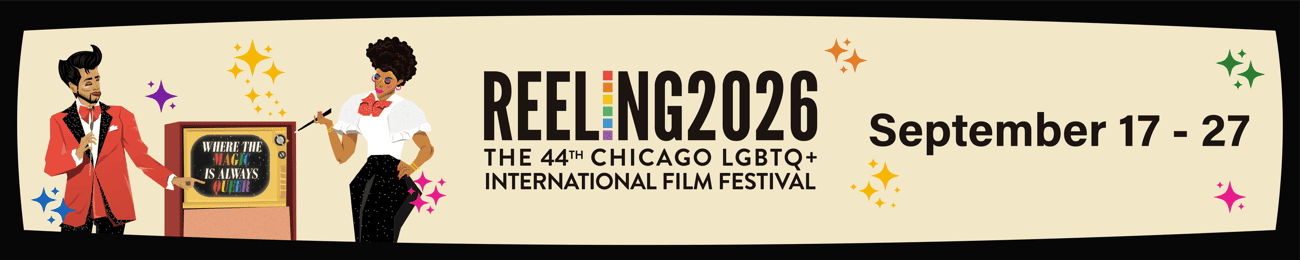
It’s that time of year again — the return of film festival season. And, if you live in the Chicago area, you may want to check out one of this year’s first featured events: Reeling 2026 — The 44th Chicago LGBTQ+ International Film Festival, September 17-27 at the Landmark Century Centre Cinema and Chicago Filmmakers. The annual event features a variety of narrative and documentary features, along with an extensive program of film shorts. Check out the program guide and schedule for details. And, as a longtime attendee of the festival, I’ll be there, covering the event again this year, so stop by and say hello. A full report on my screenings will appear after the event on my web site. Happy viewing!
The Impact of Memory

Whether or not we realize or acknowledge it, our memories can have considerable impact on us, perhaps even going so far as to define our character and drive our motivations, for better or worse. This is especially true when it comes to significantly powerful recollections, the kind that leave a profound, lasting impression on us and our psyche. But are these remembrances fixed and unalterable, essentially representing unshakable, infallible records of past experiences? Or can they shift over time, despite perpetual reinforcement that makes them seem like they’re fundamentally unchangeable? And how does that affect us in terms of our character, perspective and actions? Those are among the questions raised in the debut feature from Mexican writer-director Pierre Saint-Martin Castellanos, “We Shall Not Be Moved” (“No nos moverán”) (web site, trailer), a fact-based memoir about the filmmaker’s mother that explores the social and personal trauma she experienced in her youth and how it impacted her life thereafter.
Retired Mexico City lawyer Socorro Castellanos (Luisa Huertas) leads a rather unfulfilling life in her cramped, rundown high-rise, sharing an apartment with a sister she despises (Rebeca Manríquez), her unemployed ne’er-do-well son (Pedro Hernández) and his industrious, inexplicably devoted wife (Agustina Quinci), a career woman who has become the couple’s principal breadwinner. Socorro had a long career skillfully maneuvering her way through Mexico’s corrupt political and legal system, but it’s worn down the gruff, surly, sometimes-ruthless counselor, contributing to her failing health and embittered outlook, both of which have come to shape her everyday existence. But, more than that, she’s spent much of the past 50 years obsessing over the memory of her older brother’s killing at the hands of Mexican troops during the 1968 student protests at the Tlatelolco Massacre, one of the most violent events in the nation’s recent history.

Socorro has long sought her own brand of “justice” (i.e., vengeance) against the soldier responsible for her brother’s death, but all to no avail. However, when she comes upon what appears to be a vital clue about the alleged killer, she at last sees an opportunity to exact revenge. With the aid of the building’s jovial but untrustworthy janitor (José Alberto Patiño), a criminal whom she helped keep out of jail, Socorro hatches a plan to take down the alleged murderer.
But is this a wise idea? Is it a genuinely foolproof scheme? Is she sure of her facts? And has time hardened her memories to the point where she doesn’t question their accuracy? “We Shall Not Be Moved” provides an intriguing look at the question of how reliably we can trust our recollections, especially as we age and as infirmity, limitation and unyielding inflexibility begin to take their toll on our outlook and physical well-being. These themes are brought to bear through the film’s superb character development and stunning black-and-white cinematography, a fitting and gorgeous metaphor for the protagonist’s determined, unbending mindset. The picture’s devilish comic relief further enhances these attributes, providing the narrative with an edge that sharpens the story’s unapologetically bold sensibilities.
It may take a little effort to find this independent gem, which has principally played at film festivals and in special screenings, but it can also now be found on the Kanopy streaming service. However, no matter how one manages to catch it, the filmmaker’s premiere effort is well worth a look, a thoughtful production about a gripping subject from a promising new talent.
The Life Lessons of Two Alternative Love Stories

The hope most of us hold for romantic comedy-dramas is that everything will ultimately work out in the end. But, in real life, relationships don’t always turn out that way. So when filmmakers try to fuse those two divergent scenarios, the results can be unexpected, even dismaying, if not handled properly. However, when addressed with a skillful touch, such stories can be surprisingly entertaining, even revelatory, in many ways. So it is with two alternative love stories now available for streaming online, “Magic Hour” (web site, trailer) and “Departures” (web site, trailer).
Whether we like it or not, life is full of new beginnings, and adjusting to them can indeed be difficult. Nevertheless, sometimes they present us with circumstances that we must find a way to address, given that we seemingly have no other choice. And, in the process, despite the challenges, we may end up learning valuable insights about life and ourselves.
So it is for Erin (Katie Aselton) and Charlie (Daveed Diggs), a young married couple very much in love but who have been unexpectedly saddled with working out a drastic change in the nature of their relationship: They find themselves on opposite sides of the veil between life and death, even though they have somehow managed to find a way to remain in each other’s company, an arrangement that only they’re aware of.
(Just as an aside, some have contended that my disclosure of this fact constitutes a spoiler, something I typically strive to avoid revealing at all costs. But, in this case, it’s virtually impossible to talk about this film without noting this core aspect of the narrative. What’s more, given that this fact is revealed very early on in the picture, I don’t believe I’m disclosing anything that would likely be looked upon as a spoiler, since such considerations generally apply to a movie’s conclusion, and this story element is central to addressing what transpires after its revelation. In light of that, to avoid further “contamination,” I have endeavored to avoid disclosing which of the protagonists is on each side of the aforementioned veil to prevent further contentions of playing spoiler.)

To work out the remaining logistics of the couple’s unique situation, Erin and Charlie seek a neutral venue for their deliberations, one separate and apart from the city life to which they’re accustomed, free from the distractions that go along with it and might impinge on their process of discovery. They journey to Joshua Tree in the California desert to regroup at the home of a longtime friend, Marshall (Brad Garrett), hoping that the change of scene, its wide-open spaces with their lack of distractions and the presence of ample New Age spiritual influences will provide a suitable environment to undertake this challenge.
However, despite the sincerity with which they approach this task, they have trouble emotionally coping with such a fundamental change in their marriage. By tightly holding on to what they had (and no longer do), they’re incapable of moving on to new paths in life and the afterlife. Others genuinely try to offer comfort, guidance and support, such as a healing masseuse (Leonora Pitts), an overbearing but well-meaning mother/mother-in-law, Diane (Susan Sullivan), and a quartet of vivacious, fun-loving drag queens (D.J. Shangela Pierce. Sabryna Williams, Jo Lopez, Martin DeLuna Jr.). Nevertheless, the sought-after answers lie within Erin and Charlie themselves, and only they can find them. But will they?
That’s the challenge put to the protagonists in “Magic Hour,” the latest effort from writer-actor-director Aselton, a love story in which its participants face perhaps the most daunting obstacle to maintaining a logistically workable relationship and how attempting to do so can impair each partner’s efforts to get on with their existence in both life and the afterlife.
Comparable but different conditions provide the challenges faced by Benji (Lloyd Eyre-Morgan) and Jake (David Tag) in another alternative love story, “Departures,” a same-sex couple struggling to deal with the dynamics of their relationship. This LGBTQ+ offering about their dysfunctional romance from directors Neil Ely and Eyre-Morgan (who also wrote the script and stars in the movie) is told in the form of an extended flashback that, ironically, begins at the story’s end.
The film follows the 18-month “relationship” (a term I use loosely) between Benji and Jake. They initially meet while cruising one another in an airport bar before they both embark on a trip from their native England to Amsterdam. Benji, a sheepish middle-aged single who has a long history of bad luck in love (as illustrated in several tangential flashbacks within the main story line), takes quite a shine to the chiseled, masculine Jake, and he’s quite surprised to find this supremely confident Adonis return the attention. But, as Benji soon finds out, Jake is also a major tease, and he can’t tell if Jake is genuinely as interested in him as he might seem. However, no sooner is Benji ready to write off this romantic prospect when he unexpectedly pounces on him, leading to some of the hottest sex the lovelorn seeker has ever had.
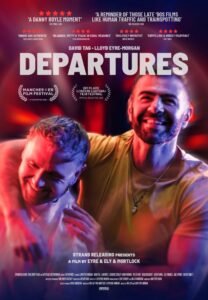
This encounter, in turn, leads to a series of weekend trips to The Netherlands, but the duo never seems to get past the casual level where they began, much to Benji’s disappointment. And, after a year of such meetings, relations never progress to anything more serious. So, when Benji confronts Jake about this, he explains that he never intended for their involvement to be anything more than just a little no-strings fun, especially when he makes clear that he’s actually more into women than men. Benji tries to rationalize Jake’s behavior as that of a transitioning bisexual (though “DL” (or “down low”) would probably be more accurate) and continues to pine away for him, hoping that circumstances will somehow turn around.
This is where matters begin to sour as Jake tries to have his cake and eat it, too, while Benji struggles to figure out his next move. But can he let go of his obsession with someone who won’t reciprocate? And is anyone at fault here for why they’re having trouble making this venture work? Indeed, what does this experience say about each of them?
As superficially different as these two pictures might seem, they both have things in common. For example, they both involve circumstances that are far from what one typically sees in more conventional relationships. Both Erin and Charlie and Benji and Jake are being confronted with uphill battles when it comes to making their partnerships succeed. And, at bottom, they’re also the only ones who can resolve their difficulties. But, the alternative natures of their relationships aside, their respective situations raise questions about how (and why) they found themselves in these challenging circumstances in the first place, conditions that, while fundamentally different from one another, are both nevertheless intrinsically trying for all concerned.
When it comes to the formation of a relationship, it’s generally understood that it takes two to tango. And those romantic arrangements require participation by, and the establishment of certain agreements (either spoken or unspoken) between, the two parties involved. Those circumstances, of necessity, call for input from each individual, and the contributions they make in that regard are inherently based on their respective beliefs, regardless of the form they ultimately take upon materialization. Indeed, their (and our) beliefs are responsible for the reality that emerges, the philosophy that makes such outcomes possible. It’s unclear if Erin, Charlie, Benji or Jake have ever heard of this school of thought, but, based on what they’re going through, it’s apparent that, on some level, they needed to have these experiences for their growth as individuals, to learn valuable life lessons that they might not have been able to get in any other way. And what characterizes the experiences of these four individuals is that they have chosen, for whatever reason and albeit subconsciously, to learn them through the context of romance.
For Erin and Charlie, for instance, it would seem that they have opted to learn lessons associated with the emotions related to separation, and what more potent way to acquire that experience than through separation where heartfelt love is involved. It’s an undeniably painful scenario, as their story clearly shows. But it’s also essential to understanding what’s involved in learning how to let go, a process nearly always integral to our personal growth as individuals, to promote our process of self-discovery and how to move forward, to exhibit the principle of “being in a constant state of becoming,” no matter how challenging, painful and difficult it may be. Enduring that can certainly seem insufferable, but, over time and with understanding, such circumstances can also ultimately reveal what it’s like to grow and evolve, to get to places in our life (or afterlife) that we might not have been able to experience any other way.
In a similar way, those principles can be applied to Benji and Jake as well. As the film so aptly illustrates, both men have lived lives where they’ve been stuck in ruts from which escape and evolution have been hard to bring about. Benji, for example, has a history of playing subservient roles in his romantic involvements, falling for the wrong kinds of guys and invariably ending up unhappy. But what has that gotten him? If ever he wants to find satisfaction and fulfillment in life, he needs to learn how to get past those conditions. And maybe the experience of being in a futile relationship with someone as fundamentally indifferent as Jake is what he needs to overcome those circumstances in order to move on to something eminently more satisfying. Indeed, as hard as it may be to accept, sometimes we have to grow sick of certain scenarios as a means to learn how to abandon them for good.

The same could be said for Jake. He’s been living a shallow, hedonistic life that might be fun in some regards but that is ultimately superficial and unfulfilling. That can be enjoyable for a while, but sooner or later it’s going to grow old and stifling. Is that a gratifying way to live one’s life for the long run? Won’t it also impede the personal growth, development and evolution that we all ultimately need for a rewarding existence and the progression of one’s soul?
While solutions to these lessons depend primarily on those who created these scenarios to begin with, that doesn’t mean they don’t have assistance available to them, provided they choose to access it. In “Magic Hour,” for instance, there are all of those individuals in the aforementioned support network who can help out. The masseuse provides physical therapy to help ease stress and restore calm. The drag queens demonstrate how to shake off the blues and learn how to have fun again. And Marshall and Diane offer the inspired wisdom of tough love to draw from, hard-edged but significant insights into how beliefs can be adjusted to change paths and start anew. Moreover, there’s the support that Erin and Charlie can offer one another, provided they’re willing to listen to the advice and not allow their emotions to unduly get in the way. Drawing on those valuable resources for guidance can make all the difference, both for Erin and Charlie, as well as those of us who find ourselves in comparable situations.
Assistance in pursuing new beginnings is available in “Departures,” too, even if it takes different forms. For Benji, there’s his hard-nosed mother (Lorraine Stanley), who takes tough love to a new level, transforming it into an artform all in itself. And, when Benji begins to suspect that longing for a relationship with Jake is going nowhere, he turns to the dating scene as an alternative, hoping that he can get break free from the frustrations of the pattern that he’s allowed to endure for far too long. That’s where Kieran (Liam Boyle) comes into play. If nothing else, this new romantic prospect helps to get Benji off the dime, even if sparks don’t fly as quickly or thoroughly as he might like. That’s because Kieran is, in many ways, a tangible reflection of Benji himself, and sometimes it can be extremely helpful to have such corporeal mirrors available to us to get motivated for breaking patterns that no longer serve us.
As for Jake, assistance is hard to come by because he’s so in denial of needing to make a change. He floats from one self-serving scenario to another when confronted by this realization. And this string of “situations” blows up in his face, creating new forms of drama to reconcile that no amount of patchwork hedonism can repair. He consequently sinks deeper and deeper into emotional quicksand that he also tries to ignore, despite the resulting anguish he experiences. He may cast impressions of confidence and happiness, but are they really? Only he can answer that question for himself.
In the case of both of these films, there are valuable life lessons to be learned through the characters’ relationship experiences. Will these scenarios deliver the results their creators seek? That depends on how diligently they pursue the solutions, change their beliefs as needed and make concerted efforts to move forward. And, should they decide to do so, they just might find that the answers can be applied to other areas of their existence as well, leading potentially to greater fulfillment all around. Here’s wishing them all the success they’re looking for.
There are certainly beneficial insights to be gleaned from both of these films, though that’s not to suggest that the pictures are without flaws. In the case of “Magic Hour,” some aspects are carried out with tremendous skill and dexterity, while others require retooling (ironically, a reflection of the characters’ personas themselves). On the plus side, this unusual love story’s excellent performances, superb character development and chemistry, gorgeous desert cinematography, and fitting soundtrack all get deservedly high marks. However, the same can’t be said for the writing, which is sometimes enigmatically vague and mistakenly assumes that viewers know what the script is trying to convey. The story also tends to feel padded at times, despite the picture’s comparatively short 1:20:00 runtime. It’s truly unfortunate that these shortcomings impinge on this offering, for, if these areas had been stronger, “Magic Hour” would have earned higher grades. As it stands now, though, viewers will have to be satisfied with the film as it is, an earnest but sometimes-incomplete effort that tries to address a hopeful but heartbreaking scenario that many of us may have to face at some point in our lives – or afterlives.
As for “Departures,” some might view this story as a downer, one whose narrative might not be seen as any laughing matter, and a good case could be made for that argument. But, given the film’s deft handling of its comic material, the story comes off as humorous and even quite charming, validating the notion that most comedy is inherently rooted in tragedy with good makeup. It skillfully combines the weight, oppressiveness and toxic qualities sometimes present in gay male partnerships, as depicted in movies like “Pillion” (2025), and the delightful sensibilities of quirky, off-beat romcoms like “(500) Days of Summer” (2009). These qualities are further enhanced here through the use of clever animation, insightful voice-over narrations by the protagonist and even a music video sequence. Be forewarned, however, that this release is not all sweetness and light: It’s explicit in both its verbal descriptions and visual depictions of sexuality, and it features more than a little foul language and elements of envelope-pushing physical abuse, so sensitive viewers take heed. But, for all of the film’s cautionary qualities, there are also life lessons to be learned from what transpires, and they help to effectively offset those potentially troubling aspects. From this, one might contend that “Departures” is not for everyone (especially those outside the gay male community), but, for those who come from this segment of LGBTQ+ society, this release may strike more than a few familiar chords, doing so in ways that are poignant, cringey and amusing all at the same time – just like many gay male relationships themselves.
As the summer movie season winds down and the selection of new theatrical releases becomes more questionable, this is where streaming platforms can become more important, especially when it comes to finding lesser-known titles worth watching. These two offerings – though far from perfect – nevertheless have a lot to offer those looking for good movies and helpful advice. Romance may admittedly be an unusual vehicle through which to explore these deeper questions, but, then, we should be willing to take our lessons from wherever we can get them. It’s a lesson for the characters in these films, as well as for us. But, if it helps to get us where we ultimately want to be, why turn our backs on it?
Sound advice if you ask me.
A complete review is available by clicking here.
Copyright © 2025-2026, by Brent Marchant. All rights reserved.