
Scrutinizing Obliviousness
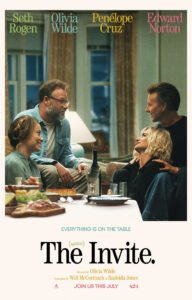
Nineteenth Century Irish novelist, playwright and raconteur Oscar Wilde, widely known for his witticisms and observations about life, is generally credited for the following arguably astute advice: “One should always be in love. That is the reason why one should never marry.” And it’s most fitting that those very words should eloquently serve as a cinematic epigraph at the start of a new comedy-drama about a casual, neighborly social occasion that goes awry while simultaneously providing its unsuspecting participants with new, eye-opening, revelatory insights about life, love, marriage, sexuality and a host of other topics, “The Invite” (web site, trailer).
Ah, the joys and comforts of wedded bliss – or, at least that’s what some might like to believe about Joe (Seth Rogen) and Angela (Olivia Wilde). The long-married couple with a teenage daughter lives in a spacious, upscale apartment in San Francisco that Joe inherited from his parents, the kind of residence that most of the city’s residents can only dream about. Joe, a former rock band member, has a stable job as a music professor at a local university, and Angela, a degreed arts graduate, is a stay-at-home mom, attending to their domestic needs, decorating and working on miscellaneous projects of personal interest.

Sounds like an ideal arrangement, right? Guess again.
The discord in the couple’s marriage becomes apparent right from the start, from the moment Joe walks in the front door after coming home from work. Yet the upset between them doesn’t originate with them. It seems that Angela has invited another couple in their building over for dinner, and it’s not entirely clear whether she has properly informed Joe about it, especially when she comes up with several ostensibly contradictory explanations to address it and his seemingly reasonable questions. At this point, the gloves come off, launching the couple into an evening of ongoing sparring, some of which involves the invited guests – and some of which doesn’t.
Before the neighbors arrive, it’s obvious that Joe and Angela are ill-prepared to entertain guests. What’s more, when Joe learns who the guests are, he’s more than a little annoyed. Admittedly, the hosts don’t know their guests well, but they certainly seem to know enough about them to have developed relatively well-defined opinions about them. For Joe, this is primarily due to the issues he has with them. He sees them as noisy and inconsiderate, particularly when they engage in frequent, raucous, late-night love-making sessions in their bedroom upstairs, which is directly above where Joe and Angela sleep (or attempt to do so). As a consequence, he’s determined to voice his concerns when they arrive, a decision that angers Angela, given that she wants to make a good impression in promoting neighborly harmony. And this dispute is only one in a series of minor disasters that occur prior to the guests’ arrival.
Needless to say, the guests can’t help but overhear the arguing from the outside hallway before entering the hosts’ apartment. So, when Piña (Penélope Cruz), a counselor, and Hawk (Edward Norton), a former firefighter, walk in, they can’t help but comment on the quarrel and ask if this is a bad time for their get-together. True to form, Angela tries to graciously smooth things over, while Joe mutters a variety of colorful asides about the circumstances, simultaneously hoping that the neighbors both will and won’t hear what he has to say. And, at this point, the dynamics of their evening together begin falling into place.

Piña and Hawk prove to be very different from their hosts. They’re decidedly free-wheeling free thinkers, far more open, uninhibited and candid than Joe and Angela, who, curiously, are simultaneously shocked and intrigued about what they have to say, both about themselves and hypothetically. As a result, Joe and Angela are quietly but systematically yanked out of their comfort zones, a scenario that gives each of them permission to be more frank as well, both about their relationship with their guests and their partnership with one another.
To say more at this juncture would reveal too much about what ultimately unfolds, but suffice it to say that circumstances unleash an array of dialogues and situations that are wildly hilarious, devastatingly dramatic, unexpectedly erotic, and, above all, revelatory on multiple fronts. Disclosures emerge involving the relationship between the two couples, as well as between the partners in each relationship. Long-hidden, and, more importantly, long-ignored, issues emerge, leaving all four members of this quartet in different places from where the evening began. These revelations also give them much to think about for the future, both about themselves individually and as couples. Who knew that so much could arise from what was supposed to be a simple get-together among neighbors for dinner and drinks?
Clearly, this is a case where the beliefs held by each of the characters play an enormous role in how their situations and mindsets have evolved. That’s important to recognize in terms of how our beliefs contribute to the formulation of our existence, he philosophy that makes such outcomes possible. While it’s likely that Piña (because of her work) and Hawk (because he’s Piña’s partner) may have heard of this school of thought, it’s also obvious that Joe and Angela are clueless, willfully oblivious or in denial about this line of thinking. And, as their conversations reveal, it’s apparent that they could all benefit from an examination of this ideology, as neighbors, couples and individuals. The key question here, of course, is, are they willing to do so?

As the evening’s festivities unfold, it’s obvious that all four participants can learn much about themselves and each other by scrutinizing their beliefs, given that they’re essential to the emergence of their respective realities. But, with a lack of understanding and awareness of this notion, how are they to begin?
This is where Piña steps to center stage. As a counselor, she spends her days helping people come to better understandings of themselves. In this regard, then, she acts as an informal facilitator to address this question. And, even though she tends to express her ideas in psychological terms (with twinges of metaphysics thrown in for good measure), she nevertheless impresses on the others the idea that the world around them begins with them. And that, in turn, originates with the beliefs they each hold about that world in all of its aspects.
Of course, it’s virtually impossible to tweak those beliefs without an awareness of the role they play in conceiving their world in the first place. Piña clearly understands this, and her influence has apparently rubbed off on Hawk by virtue of their relationship. She also recognizes that Hawk began to understand this concept before they met, given the changes that he made in his beliefs (and in his life) in the wake of his experience with a devastating personal tragedy, one that prompted him to give up firefighting and refocus his life in other directions. These changes, in turn, opened up a path that led him to Piña and the start of a new way of life.
Their efforts in these regards, however, vastly outshine where Joe and Angela are in their lives, both individually and as a couple. That’s because they’re still in the starting blocks of this process. They obviously have no understanding or appreciation for the power of their beliefs and what they can achieve. In fact, it’s almost as if they’ve put on blinders to keep them from seeing the truth. They essentially live in willful ignorance of the concept, blissfully oblivious to what their beliefs are and what they can do for them, again both individually and collectively.
In essence, then, waking up to this way of thinking and then examining the specific beliefs dictating their existence is imperative if Joe and Angela want to understand why their lives and relationship have emerged as they have. Joe, for example, feels unfulfilled by his university job when he’d rather be making music of his own. Angela, in turn, seems to be doing little more than keeping herself busy with her daily domestic routine instead of putting her education to use in something more substantive. And, because each of them derive little satisfaction from what they’re doing with themselves, the stress they’re each experiencing can’t help but spill over into other areas of their existence, such as the health of their marriage.
However, because they have deliberately chosen to ignore these circumstances and the beliefs that prompted them, they remain mired in denial and, consequently, a seemingly unending stalemate, one that’s been made worse through purposeful disregard. Is that a productive and fulfilling use of our beliefs, considering what they’re capable of creating and accomplishing? But, to get off this intractable dime, they must become aware and accepting of this process to begin making any forward progress.
It’s also important to note that, from the range of areas affected by the couple’s apparent stagnation, they’re dealing with adjusting their core beliefs, the notions that function like a computer’s operating system for driving all of the software programs and apps riding in top of it. Redefining these beliefs can be a significantly challenging process in light of everything they’re being tasked to do. By the same token, however, it’s also impressive what altering them can achieve, given the power they carry and the range over which it can be applied. But none of this will matter if no effort is made to overcome whatever obliviousness might get in the way of making any of this happen. Time to get busy.
To some, “The Invite” might sound more like a therapy session than a work of entertainment, but nothing could be further from the truth. While the film offers up its share of meaningful philosophical insights, it’s anything but a dry or cathartic session on a shrink’s couch. Indeed, this latest feature from actress-filmmaker Olivia Wilde is easily her best work behind the camera to date.
Based on the 2020 Spanish comedy-drama, “Sentimental” (released domestically as “The People Upstairs”), this American remake presents an incisive, sometimes-brutal, often-cynical and wickedly funny look at the subjects of relationships, self-awareness and personal fulfillment through the eyes of two married couples. Their time together is characterized by witty and scathing exchanges that cleverly go for the jugular, as well as moments of deep drama, heartwarming tenderness and stunning insights about one another. It thus depicts an evening of provocatively unexpected twists and turns that leave both couples drastically changed by night’s end, a change that could well impact viewers, too.

While the film occasionally tries a little too hard to evoke viewer responses (especially at the outset), once the picture finds its groove, it effectively fires on all cylinders, thanks to the outstanding writing and stellar performances of the perfectly cast quartet. “The Invite” feels very much like a Woody Allen movie from the days when he was at the peak of his career but without being a blatant copycat. What’s more, given that the bulk of the film takes place on one set, it comes across like a play, but the picture never feels the least bit stagey, maintaining a steady pace and effectively holding audience attention.
This release defied any expectations I might have had about it going into the theater, a pleasant surprise in itself, but the fact that it shines on so many fronts makes it all the more worthwhile. The picture is admittedly sometimes a little cringey to watch, but it always rebounds, redeeming itself with perfectly timed comic relief. This is one invitation you won’t want to turn down. The film is currently playing theatrically.
Turning a blind eye to difficult situations may provide temporary relief under trying circumstances, but it’s hardly a long-term remedy, especially since believing in that notion can do more harm than good by forestalling much-needed resolution. Getting to the root of the matter – correcting the beliefs that are the source of the problem – is the only way to rectify it. That can be an unsettling prospect, to be sure, but consider how much more anguish we might experience by intentionally, albeit unconsciously, keeping the issue at bay. Indeed, that’s “inviting” trouble, and, for my money, I’d rather that the invitations that come my way have more to do with dinner and cocktails than tackling needless, avoidable self-inflicted distress, not to mention no hors d’oeuvres..
A complete review is available by clicking here.
A Profoundly Human Drama

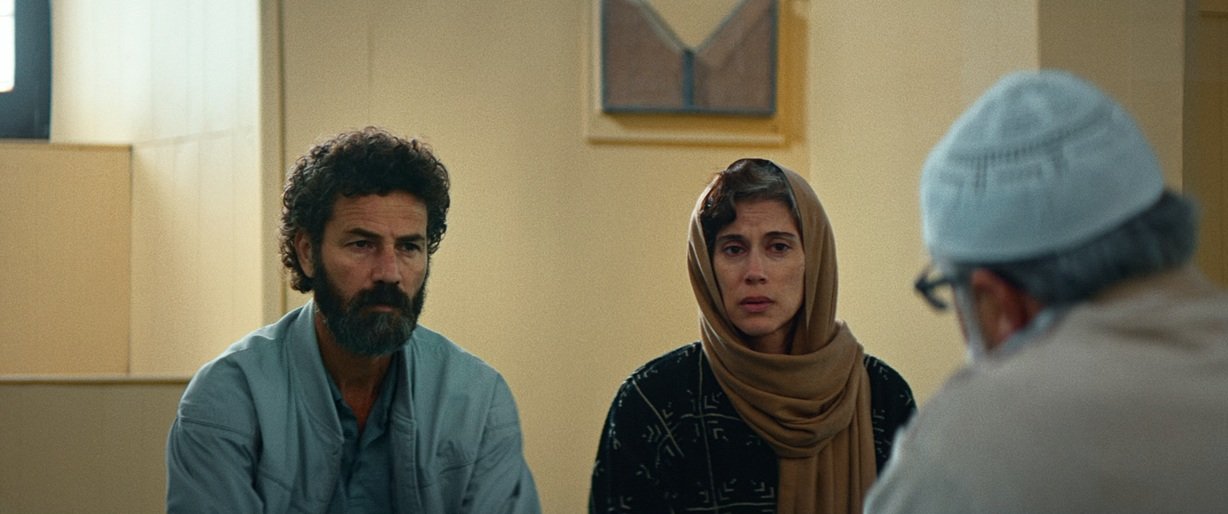
Grand, sweeping epics with stories spanning many years (if not decades) have long been a staple of the movie industry, typically capturing numerous awards and big box office tallies, even though their popularity has slowly been waning somewhat in recent years. However, the third feature outing from actress-writer-director Cherien Dabis, “All That’s Left of You” (“Allly baqi mink”) (web site, trailer), represents a return to that tradition, and in impressive fashion, one that raises heady questions about morality, forgiveness and a search for the means to courageously move beyond longstanding differences.
Set in Palestine and told in four acts from 1948 to 2022, the film follows the experiences of three generations of the Hammad family from the time of Israel’s establishment to the recent past. The picture chronicles the struggles these individuals face in the wake of the confiscation of their and their peers’ lands and properties in Jaffa (now Haifa), their relocation to remote refugee camps, and the ongoing oppression imposed on them in their daily lives by Israeli authorities. It also poignantly depicts the anguishing decisions associated with questions of compliance vs. reprisal, the high costs of fighting back, and the pain of loss in the face of those harsh conditions. But, if all that weren’t enough, the film also examines the hard choices that flow from such dire circumstances, tough decisions involving ethics, deeply held spiritual considerations and secular practicality, particularly in the areas of compassion and, potentially, the lives and deaths of loved ones and innocent though hated enemies.

While the story’s pacing could use some modest accelerating in a few stretches, this otherwise-masterfully constructed offering generally moves along smoothly, maintaining a steady flow across nine decades and doing so with heartfelt emotion and gripping drama, especially in its tearful third act. Through it all, the narrative continually yet sensitively raises the question, “Can any good come out of such devastating heartache?” and, if so, “What form will it ultimately take, and is the cost truly worth it?” The filmmaker addresses these issues through a sharply penned screenplay and smartly conceived narrative, fleshed out through the excellent performances of its superbly assembled ensemble, particularly Dabis, Muhammad Abed Elrahman, Maria Zreik, and Saleh, Mohammad and Adam Bakri.
It’s virtually inconceivable that anyone could walk away from this release without being profoundly affected, particularly since it accomplishes this goal rather unobtrusively, never becoming overhearing or resorting to heavy-handed manipulation. For its efforts, this streaming offering earned a well-deserved Independent Spirit Award nomination for best international film, along with wins and nominations at numerous film festivals. “All That’s Left of You” is one of those releases bound to leave a deep and lasting impression on viewers – and deservedly so. No matter where one stands on the Israeli-Palestinian conflict, this is a film more about humanity than politics and the inherent need to dutifully honor and respect it – regardless of one’s nationality or ethnicity.
A Plan for Living
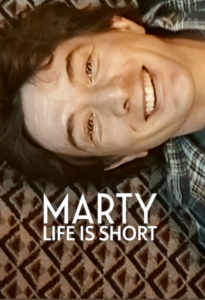
For what it’s worth, celebrities are often regarded as vain, narcissistic, self-absorbed and unapologetically materialistic, generally consumed with their own ambitions, being the center of attention and lining their pockets. Seldom are they widely recognized for qualities like artistic integrity, personal fulfillment and noble intentions. But those generalizations do not always provide realistic depictions; there are individuals who indeed embody sincere motivations that drive their craft and their lives. But how do they defy the so-called model and turn out like that? Such is the point behind the new Netflix documentary profile of actor-comedian Martin Short, “Marty, Life is Short” (web site, trailer).
Born in Hamilton, Ontario, Canada in 1950 into a nurturing, creative, fun-loving family, the youngest of five children hadn’t initially considered a career in entertainment, even though he was surrounded by multiple influences for doing so within the household of his upbringing. His father, Charles, was known as a jovial sort both in the business world and at home. His mother, Olive, was a concertmistress for the Hamilton Symphony Orchestra. And his older brother, Michael (interviewed in the film), grew up to become a sketch comedy writer, earning 17 nominations and 3 awards for his work.

In an environment like that, it was hard for young Martin not to be influenced. And, once in college, he began acting upon that impulse under the advice and encouragement of his classmate and best friend, Eugene Levy, with whom he would later work professionally. Before long, Short gave himself a year off after graduating with a degree in social work to see if he could turn his newfound passion into a full-time pursuit. And the rest, as they say, is history.
In no time, Short became a cast member of the now-famous 1972 Toronto production of Godspell, which launched the careers of such entertainers as Gilda Radner, Andrea Martin, Victor Garber and Levy, not to mention Short himself. He then went on to become part of the Canadian company of the Chicago-based Second City comedy troupe. These experiences subsequently launched Short into stints on SCTV and Saturday Night Live, a string of Hollywood movies (including such titles as “Three Amigos” (1986), “Innerspace” (1987) and “Father of the Bride” (1991)), and a run on Broadway in two Neil Simon musicals, The Goodbye Girl (1993) and a Tony Award-winning role in the revival of Little Me (1999). Not bad for someone who at one time hadn’t taken a career in show business seriously.
However, for all of the breaks that fell his way, not all of Short’s projects were successful. “Three Amigos,” for example, was widely panned by critics. And “Innerspace,” though critically acclaimed, bombed at the box office. But Short wasn’t concerned. He came to realize that not everything he undertook was going to work. In fact, he has been known for openly observing that “98% of all entertainment projects ultimately fail” but that those that flop are generally offset by the ones that succeed. For Short, the primary consideration is, “Was the project fun to work on?”
Some might see this as a way of whitewashing a failure, but Short is dead serious about his attitude. As a performer who loves to create, engage in experimentation and improvisation, and simply enjoy what he’s doing, material and critical success are almost secondary considerations. To be sure, he would be pleased if everything he touched turned to gold, but he doesn’t lament the experience if that doesn’t happen. Again, it goes back to a question of, “Was the project fun to work on?”
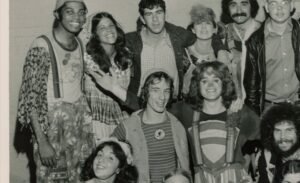
So where did Short’s eternally optimistic attitude come from? To a great degree, it grew out of his upbringing. Having come from a family in which having fun was a priority, that attitude became ingrained in his being. What’s more, when he began taking a more committed interest in entertainment as a career path, he found cohorts like Levy, his Godspell castmates, and his peers at Second City and SCTV who embodied similar attitudes. Those professional peers became like a second family, one that was characterized by the same traits as those found among his blood relatives.
Given his success in employing this approach to living in his professional life, he adopted a similar approach to his personal life. It was a key consideration, for instance, in the courtship of the love of his life, actress-singer Nancy Dolman, and the adoption of the couple’s three children, Katherine, Oliver and Henry. And, from home video footage of Short’s off-screen life incorporated into this documentary, it’s apparent that he derived as much enjoyment from being a dad as he did from working on professional projects.
Short’s attitude has also helped him get through hard times. For example, in his adolescence, he lost both his parents and his eldest brother, David, who was one of Martin’s best friends at that time. This sorrow came back again years later when Short lost his wife in 2010. These deaths were difficult losses, to be sure, but Short took comfort in being grateful for having had the opportunity to share joyful experiences with these loved ones rather than spend his days wallowing in grief. The heartache would always be there, but that didn’t mean that it had to come to dominate his thinking and behavior.
Short’s success in implementing this plan for living has provided him with a rich, fulfilling life both personally and professionally. In fact, he has even been able to combine relationships from both areas of his life into a larger family of sorts, one in which his professional peers and their relations have become integrated with those of his own kin. This is depicted through never-before-seen home video footage from many social gatherings in which all the members of this enlarged “family” have come together to participate, such as summer outings at his cottage in Canada and at his legendary holiday parties. And, just to illustrate how integrated these festivities have become from both personal and professional standpoints, these events include inventively hilarious impromptu entertainment activities in which everyone partakes, a contemporary expression of creativity not unlike what Short enjoyed in his household during his upbringing.

As a consequence, Short’s plan for living has paid off in many ways. It has provided him with ample satisfaction both on- and off-screen. It has shaped his outlook on life to one in which he derives much enjoyment, even when laughing and crying through the tears. It has made him one of the most connected individuals in show business. And it has enabled him to become one of the most in-demand commodities in Hollywood, as seen in his recent success in the TV series Only Murders in the Building with co-stars Steve Martin, Selena Gomez and Meryl Streep.
None of this would have been possible, however, were it not for Short’s beliefs, and that’s crucial in light of the role they play in shaping the nature of our existence, the philosophy that makes such outcomes possible. It’s not clear if Short has heard of this school of thought, but, considering what he’s built for himself, it’s apparent thar he is well versed in its principles and how to employ them. What’s more, given that he has been able to apply them on multiple fronts, it would seem he has a masterful grasp of how to use them holistically, generating fulfilling results in an array of contexts. And, if that’s not a plan for living, I don’t know what is.
From the foregoing discussion, the core beliefs driving Short’s overarching perspective should be obvious, both in their inherent nature and the results they’ve wrought. His optimism, his belief in finding ways to take enjoyment from whatever situations one finds oneself in (no matter how flawed or impermanent they may be), and his commitment to creating a loving, nurturing family-like environment for oneself and others in both personal and professional circles are all undeniably apparent. But those notions, as important are they are, might not be as impactful were it not for some of the component beliefs that go into them, notions that enhance those that they support.
For instance, Short demonstrates a tremendous capacity for events to unfold naturally, which likely accounts for his talents in the area of improvisation. This is apparent in his public performances, as well as in his off-screen time. This is evident in some of the home videos from occasions like his summer outings at his cottage, where he and his guests put on impromptu “shows” for others that are totally made up on the spot. One of the best of these sketches features Short, as his signature character Ed Grimley, a spikey-haired geek he created while a member of the Second City troupe, and houseguest Tom Hanks, as his Oscar-winning character Forrest Gump, in re-enacting a scene from “Butch Cassidy and the Sundance Kid” (1969) in which the film’s protagonists, Paul Newman and Robert Redford, debate jumping off a cliff into a canyon river (or, in this case, off the upper deck of a ferry boat into a lake) in order to avoid capture by authorities but hesitate doing so because Sundance (Redford) can’t swim. This sidesplitting bit unfolds so naturally that one would swear it was scripted, but Short’s belief in letting things flow unimpeded demonstrates otherwise, a tactic that he readily applies in many areas of life.
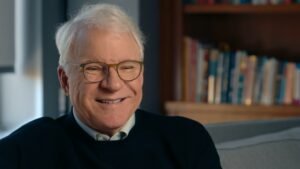
Activities like this, in turn, illustrate Short’s penchant for blurring the lines between working and playing. When one watches one of his performances – whether improvised or not – he makes the outcome look effortless. And that’s because he believes that we must have fun while carrying out our work, that it really should be more like playing than straining. This is a recurrent theme in the film in which Short fervently speaks about the joys of his career, noting that he feels so fortunate to be in a line of work that is inherently so much fun. And, if that sounds like a resounding endorsement of being free to express gratitude for one’s fortunes, you’d be right. It’s yet another of the component beliefs that figures prominently in his plan for living.
Of course, this is not to suggest that everything is nonstop fun and games; Short is well aware of life’s practicalities like paying the mortgage, covering household expenses and addressing other fundamental obligations. But how one goes about these tasks matters, and that’s where striking a balance comes into play in the way one approaches them. This has figured into his thinking, and that becomes obvious when viewers witness Short enthusiastically going about his business, whether it’s performing the mundane chores of everyday life or performing a new comedy routine. It’s as if they carry equal weight, with one being just as important as the other, another element of his plan for living.
Perhaps the most important of his component beliefs, however, is his capacity for inclusivity, another of those traits that came out of his upbringing. When it comes to his work with others, he’s committed to offering support and making colleagues feel welcome. Likewise, when one sees the kinds of parties and social gatherings that he throws, it’s understandable how everybody would like to attend (and he would likely insist that everybody be invited). And, according to many of his friends, a good time is guaranteed at these events. In fact, as one of them puts it, being in Short’s company is so highly desired that, if he were asked to a dinner party but had to cancel, it’s a good bet that most of the other guests would follow suit if they knew he wouldn’t be there.

Sounds like quite an enviable plan for living, wouldn’t you say?
I find it interesting that this is the message that comes out of a film like this. It’s certainly not what I expected when I switched it on. While it’s true that, like many films that examine show business personalities, this offering chronicles the history of the prolific performer’s work, but there’s more to it than that. Rather rather than just rattle off a laundry list of accomplishments, “Marty, Life is Short” delves into how his career evolved and how he avoided many of the pitfalls of his peers. Consequently, in building his body of work and amassing an abundance of personal enjoyment, he has made this his yardstick for satisfaction.
These are attainments that many cinematic show business profiles overlook or understate and that help to set this film apart from others like it. Credit the narrative approach employed by filmmaker Lawrence Kasdan in this effort. As a longtime friend of Short, Kasdan has added a valuable dimension to the core of this story, proving that sometimes familiarity with one’s subject trumps objectivity when telling a compelling biographical tale. The picture is also replete with many clips from Short’s film and television work, as well as ample archive material showing the subject’s on- and off-screen life. There are also numerous enlightening interview segments with Short’s friends, family and peers, both from the recent past and years ago, including such luminaries as Steve Martin, Tom Hanks, Steven Spielberg, Catherine O’Hara and Andrea Martin. In a nutshell, this release presents a balanced, insightful and heartfelt look at a comic genius (not unlike the protagonist himself), one who defies the image often associated with so many others in his profession, and gives us lots of well-earned laughs along the way. The film is available for streaming on Netflix.
Sadly, many of us drift through life without direction or any idea of how to live our lives. So it’s really quite ironic that those who have the fullest plates also somehow manage to formulate game plans for themselves that allow them to achieve much and derive the greatest levels of fulfillment from their endeavors. As this documentary so clearly reveals, Martin Short is one of those individuals who has learned how to pile up his plate without spilling anything (and, even if he did, he wouldn’t worry, because there’s always more to be had). The key, however, is believing in the possibility and incorporating those beliefs into a plan that works. He seems to have figured it all out, and his example sets a good precedent for the rest of us to follow – and, just maybe, to have a good time at it, too.
A complete review is available by clicking here.
Copyright © 2026, by Brent Marchant. All rights reserved.